

Reading time
3
min
App Development: Scrum, Without a Scrum Master
Programming, development, design, and content are just a few of the areas involved in app development. The more robust the project, the more people are involved in each stage to ensure excellence in the final product—and, with some luck, deliver it on time.
The Scrum methodology, based on sprints (project cycles), helps agile teams stay organized, structure development stages by area, and deliver projects within the expected timeframe.
Through daily alignment meetings—and reviews at the end of each sprint—you can clearly track scope, progress, and possible bottlenecks using a basic premise: Team “B” only starts working on a task after Team “A” has completed its part.
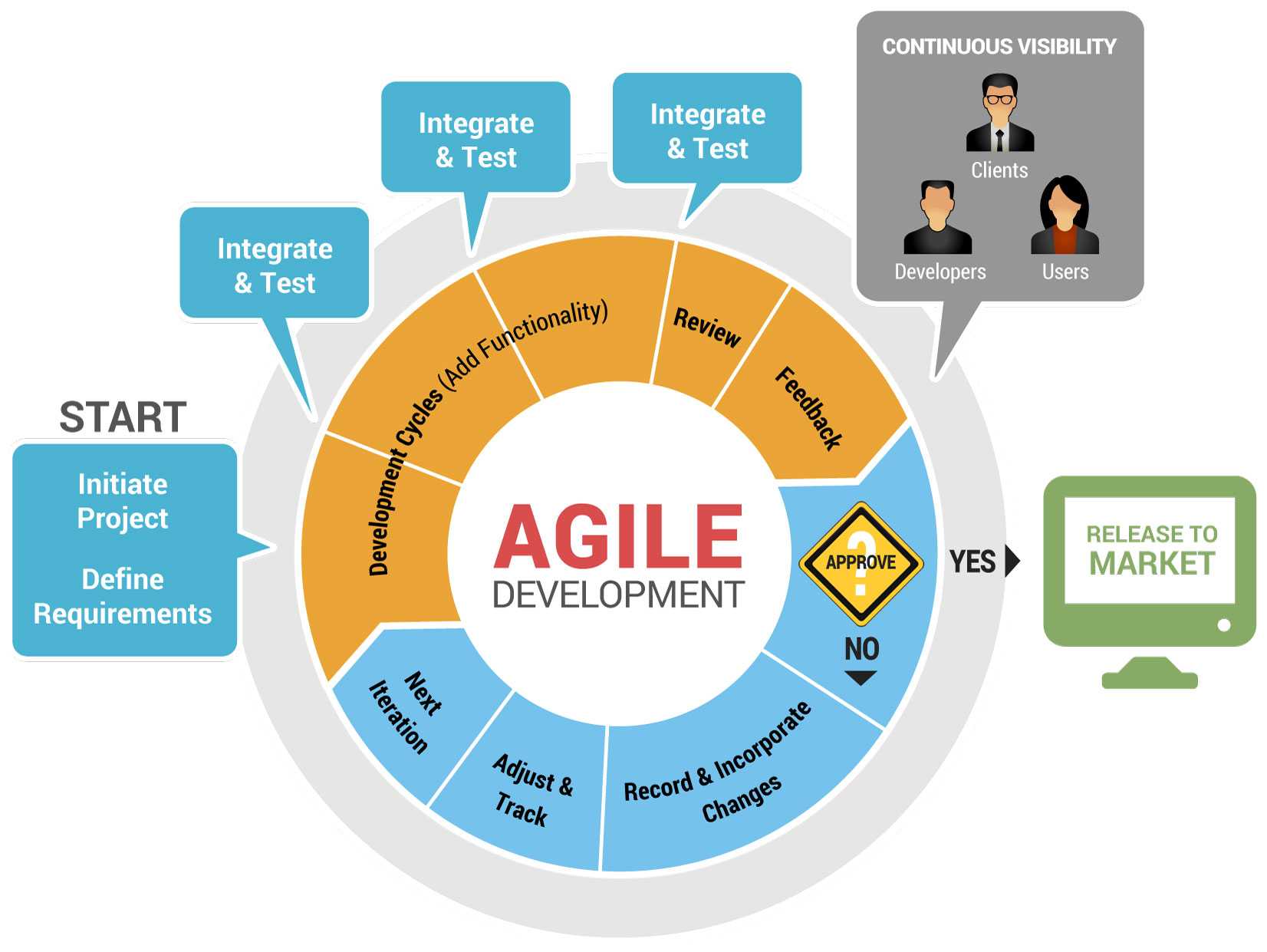
With better alignment between teams through these partial validations, delivery becomes much faster. According to the method’s creator, Jeff Sutherland:
“Scrum is the art of doing twice the work in half the time.”
But for Jeff’s phrase to match the real world, the most important agent in the process must participate: the customer who is hiring the app development.
Scrum works with agile teams that can deliver quickly… as long as there are no external dependencies.
The customer is often the biggest blocker to the progress of their own teams. They need to be present at each stage of the process to help ensure scope is delivered on time—rather than the opposite.
A practical example is the customer who hires the agile team but “disappears” when it’s time to approve stages. In Scrum, if a stage isn’t approved to be passed to the next team, product development simply stops.
And with agile teams blocked, predictability around the scope collapses.
So the product owner can be considered one of the project’s protagonists—and, as such, needs to take responsibility. If they can’t attend daily meetings, they should at least be present in sprint review meetings, which represent the official handoff between teams.
The Scrum methodology works with an open scope, which means unforeseen changes can happen throughout the project.
Working with this type of scope has advantages and disadvantages—and the disadvantages can be gradually reduced as long as everyone involved commits to their deliveries.
The main benefit of adopting Scrum in app development is the staged delivery approach, where the customer receives the product “a little at a time” and can therefore be better positioned to (re)define the next steps.
In addition to being able to make targeted changes without waiting until the project is fully completed to notice an early mistake, customer feedback reaches the team faster—preventing an outdated product and enabling ongoing changes and improvements during development.
On the other hand, the main disadvantage relates to what we discussed earlier: a Scrum project will always depend on customer approval—and if the customer doesn’t approve, progress is compromised.
It can also happen that a stage identifies a dependency that requires hiring other teams.
That’s another issue that involves customer approval and cost review. This points to yet another disadvantage of open scope: it becomes harder to have a holistic view of the budget, because features, teams, and the entire production chain can change at any time.
An app requires continuous development processes, because it doesn’t end with delivering the first finished version. Since it depends on systems, continuous improvements, and smooth usability, an app becomes a “living organism” after people start using it.
It will require care, monitoring, and quick responses to problems that may arise within the app itself—or due to competing products.
That means the people involved in building it will most likely continue to support it for a long time. And then the methodology used to keep managing teams and stages makes a huge difference in future deliveries and costs.
Open scope doesn’t always work, which means Scrum doesn’t work for every app.
The company that owns the product needs to be prepared to handle approvals and revisions—and to build agile teams capable of valuing the final delivery.
So each case must be considered individually, preferably with consulting from specialists who build apps with both open and fixed scope. With external help, it becomes easier—and cheaper—to understand the best way to deliver a strong app to the market.
X-Apps specializes in app development and offers services for both fixed scope and open scope, including Scrum.
Visit our website to schedule a conversation with one of our specialists today.


