

Reading time
5
min
What is DevOps?
For years, humanity waited for the app that would finally put the music industry in our pockets. Some options emerged strongly, but none seems to be as effective as Spotify, which has around 20 million customers (five million paying) listening to a wide range of music every day.
The startup’s internal team, which shares a bit of the company’s daily life on the Spotify Labs blog, needs to deal with all the basic demands of a startup and, in their specific case, ensure that one billion user-created playlists are available at any time.
To accomplish that goal successfully, Spotify uses agile methodology such as Scrum and Lean Startup concepts to keep the wheel turning. Its improvement processes are continuous and based on values like transparency, informality, and purpose, with organized teams that have a lot of autonomy.
After all, that is exactly what’s expected from an agile team: that each part of the machine can evolve in pursuit of a common purpose shared by every part of the company.
To do what Spotify does and use agile methodology as a north star for processes, you need strong communication and integration between areas, as well as training teams for a gradual cultural change.
Scrum helps practices become scalable and organized, where one team only starts work once another delivers, within a predefined timeline. The main goal is to deliver everything on time but, to do that, without having to constantly race against the clock.
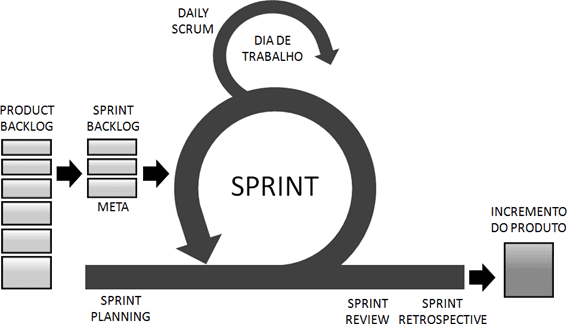
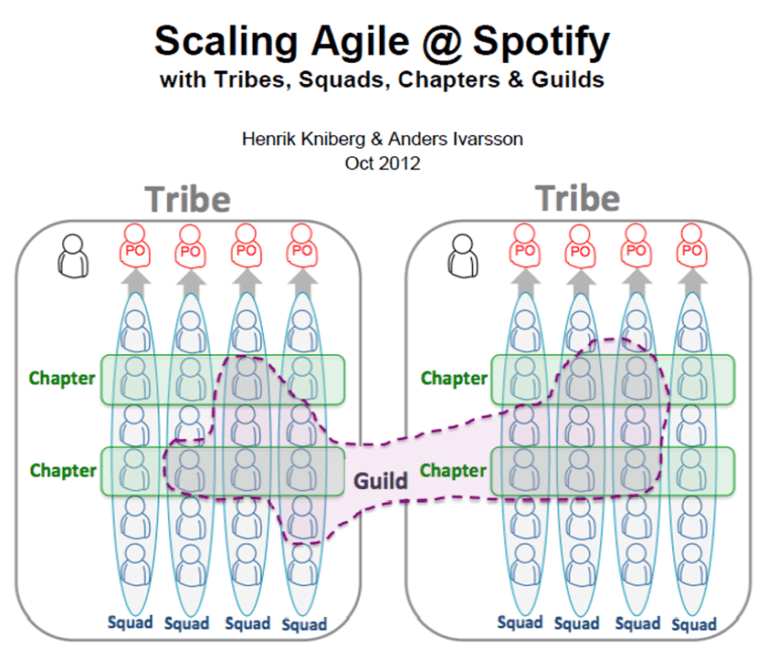
At Spotify, agile methodology was implemented through the Squad structure, which is focused on development. A Squad aims to be a mini-startup inside the larger startup, self-organizing and deciding on its own which internal processes to follow.
This also helps organize other teams according to their role inside the company: software development, design, marketing, sales, support, etc. Each team embraces, within Scrum, its responsibilities and the timeline for each task.
That way, each team owns a functionality and is accountable for it. When something is delayed, or any other bottleneck is identified, it becomes easier to understand where the problem is and solve it when agile methodology is applied.
At Spotify, teams also use Lean Startup principles to deliver results. The main idea is to build an MVP (minimum viable product) and validate learning with tests and metrics to understand what works and what doesn’t, as soon as ideas emerge.
This is a way to understand, with much more confidence, whether you are doing exactly what the customer wants—or needs—before spending investment, money, and team time on something that may go nowhere.
It’s common, for example, to have an idea and put everyone to work on it without knowing whether it will actually take off. With the Lean Startup concept you test the idea in its earliest stages to get that answer.
That’s what an MVP is: you don’t need fancy design, and you don’t need to overthink every feature. Launch a minimum viable product and see how the public responds.
At Spotify, the combination of Scrum with Lean Startup generated the motto “think, build, deliver, and adjust”. This is a perfect way to deliver value, incredible products, and innovative projects on time.
X-Apps uses the same methodology as Spotify for some of its clients and can help you pursue continuous improvement, organize teams and processes, and—of course—deliver more value to your audience.


